
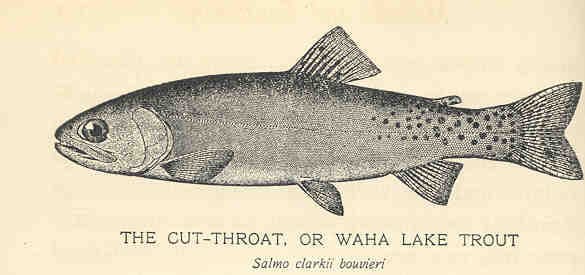
trout
Oncorhynchus clarkii
The cutthroat trout holds a special place in the hearts of western anglers as the native trout of the American West. Named for the distinctive red-orange slash marks beneath the lower jaw, cutthroat trout encompass numerous subspecies adapted to the diverse watersheds of western North America, from the Yellowstone cutthroat of the Greater Yellowstone Ecosystem to the westslope cutthroat of the northern Rockies and the coastal cutthroat of Pacific Northwest streams. Cutthroat trout are generally more willing to take a dry fly than brown trout, making them a delight for surface-oriented anglers. Many subspecies face conservation challenges from habitat loss and hybridization with non-native rainbow trout, making catch-and-release practices especially important when targeting these beautiful native fish.
Order
Salmoniformes
Family
Salmonidae
Genus
Oncorhynchus
Species
O. clarkii
Cold mountain streams, alpine lakes, and coastal rivers; prefers clean gravel substrates for spawning and water temperatures below 62°F
Native Range: Western North America, from Alaska south to New Mexico, with distinct subspecies in the Yellowstone, Columbia, Colorado, and Lahontan basins
Introduced Range: Limited introductions within western North America to restore native populations in historic habitat
Aquatic insects (mayflies, caddisflies, stoneflies), terrestrial insects (hoppers, ants, beetles), small crustaceans, and occasionally small fish
Cutthroat trout are spring spawners, typically reproducing from April through July depending on elevation and water temperature. They require clean, well-oxygenated gravel in tributary streams. Some lake-dwelling populations migrate long distances to access suitable spawning habitat.
Spawning Months
Spawning Temperature: 43-50°F
The Cutthroat Trout is currently classified as Varies by subspecies; Lahontan and Greenback subspecies are Threatened under the ESA; Yellowstone cutthroat are a Species of Concern. Responsible catch-and-release practices help protect populations for future generations of anglers.
Cutthroat trout are aggressive surface feeders and often respond enthusiastically to attractor dry flies even when no hatch is occurring. Present flies with a drag-free drift and don't be afraid to size up your patterns. High mountain lakes often produce excellent sight fishing opportunities in crystal-clear water.
A 9-foot 4 or 5-weight rod covers most cutthroat situations. Use 4X-5X tippet for dries and small nymphs in clear water.
Map loading…

Wild Trout in the Shadow of the Tetons
Northern Rockies

Gold Medal Waters at High Altitude
Central Rockies

The Last Best Place for Fly Fishing
Northern Rockies

The Gem State's Hidden Trout Waters
Northern Rockies

freestone
Snake River Cutthroat Trout · Brown Trout · Mountain Whitefish

freestone
Cutthroat Trout · Rainbow Trout · Brown Trout

freestone
Brown Trout · Rainbow Trout · Brook Trout
Average Size
10-18 inches, 0.5-3 lbs
World Record
41 lbs (Pyramid Lake, Nevada, 1925)