Executive AnglerExecutive Angler
Flies

The fly fishing intelligence platform. Journal every session, build fly recipes, and read river conditions before you tie on.

Download on theApp Store
Get it onGoogle PlaySoon

Product

  • Journal
  • Rivers
  • Flies
  • Gear Locker
  • Feed
  • Import & Export

Discover

  • Madison River
  • Montana
  • Fly Library
  • Green River
  • Belize
  • Destinations
  • Articles

Directory

  • Lodges
  • Guides
  • Fly Shops
  • Gear Catalog
  • Search

Company

  • About
  • Contact
  • For Guides

© 2026 Executive Angler

All systems operational
PrivacyTermsContactSitemap
Pink Salmon fly fishing

Pink Salmon

Oncorhynchus gorbuscha

Species
HomeSpeciesPink Salmon

Overview

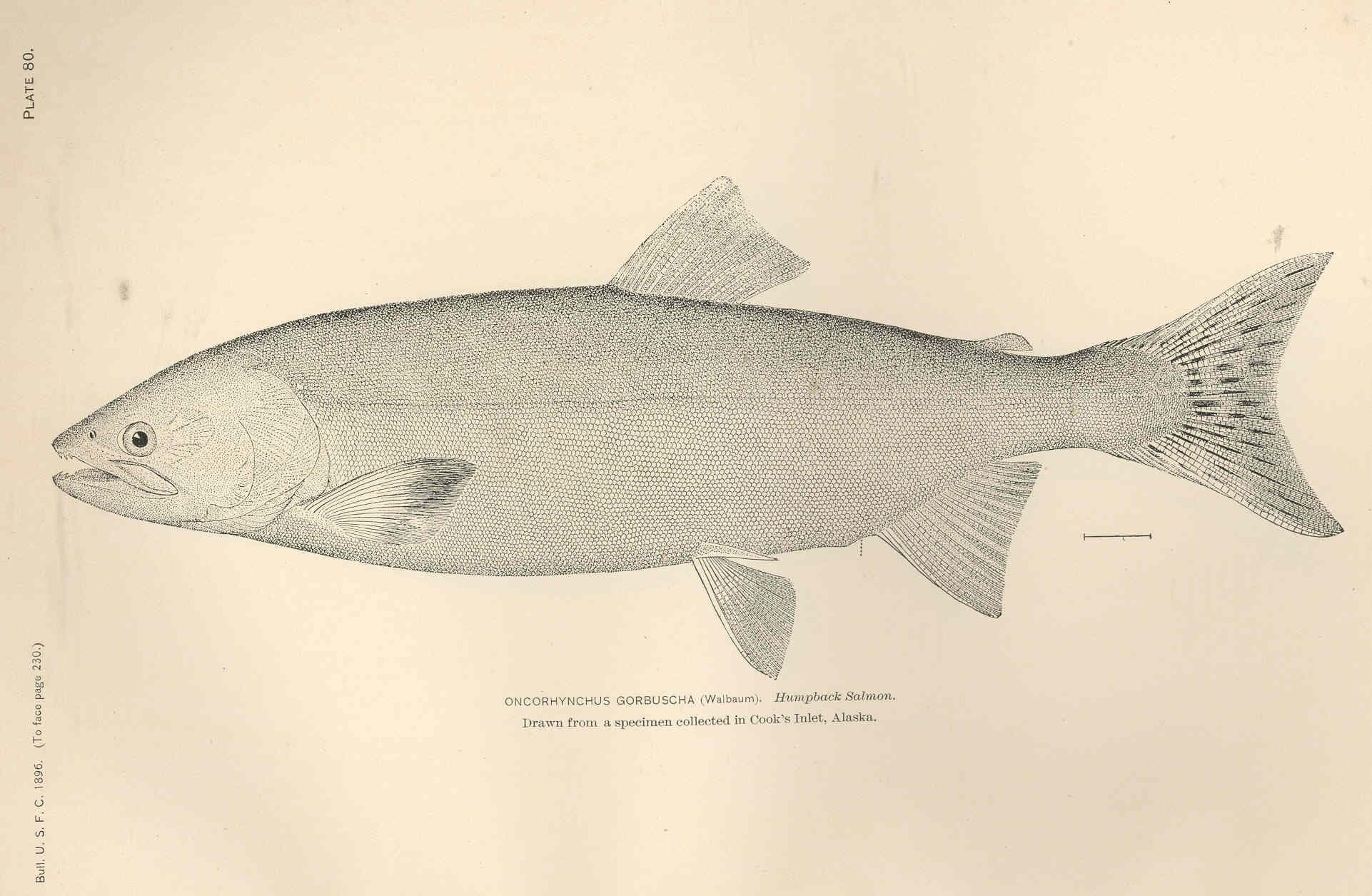
The pink salmon is the smallest and most abundant of the five Pacific salmon species, returning to spawn on a rigid two-year cycle that produces massive runs in odd-numbered years throughout much of Alaska and British Columbia. Known locally as humpback salmon or humpies for the pronounced dorsal hump that males develop during spawning, pink salmon are often overlooked by fly anglers focused on larger species. However, fresh pink salmon in the tidewater and lower river reaches are spirited fighters on light tackle and will readily take small bright flies. Their sheer abundance means that when the run is on, anglers can experience nonstop action with aggressive fish willing to strike on nearly every cast. Pink salmon provide an excellent entry point for anglers new to salmon fly fishing and offer a high-energy alternative when rivers are between peak runs of larger species.

salmonLeast Concern (IUCN); the most abundant Pacific salmon species with healthy populations throughout Alaska and British Columbia

Taxonomy

Order

Salmoniformes

Family

Salmonidae

Genus

Oncorhynchus

Species

O. gorbuscha

Habitat & Behavior

Nearshore ocean waters during marine phase; tidal estuaries, lower river reaches, and small coastal streams during brief spawning runs

Native Range: North Pacific Ocean from Sacramento, California north through Alaska, across to Korea, Japan, and Arctic Russia

Introduced Range: Great Lakes (self-sustaining populations established), scattered Atlantic coast rivers in Maine and Maritime Canada

Diet

In the ocean: zooplankton, small crustaceans, squid, and small fish; non-feeding in freshwater during spawning migration but will strike bright, flashy flies

Spawning

Pink salmon have a strict two-year life cycle, spawning in odd years in some rivers and even years in others. They spawn from July through October in small coastal streams and lower sections of larger rivers. Females deposit 1,500 to 2,000 eggs in shallow gravel nests, and all adults die within weeks of spawning.

Spawning Months

Jan
Feb
Mar
Apr
May
Jun
Jul
Aug
Sep
Oct
Nov
Dec

Spawning Temperature: 44-52°F

Conservation Status

Least Concern (IUCN); the most abundant Pacific salmon species with healthy populations throughout Alaska and British Columbia

The Pink Salmon is currently classified as Least Concern (IUCN); the most abundant Pacific salmon species with healthy populations throughout Alaska and British Columbia. Responsible catch-and-release practices help protect populations for future generations of anglers.

Fly Fishing Tips

Target fresh, ocean-bright pink salmon in tidewater and the lower few miles of spawning streams for the best sport. Use small, bright pink and chartreuse flies on a dead drift or slow swing. Light tackle heightens the experience, as these scrappy fish fight well above their weight class on a 5 or 6-weight rod.

Tackle Recommendations

A 9-foot 5 or 6-weight rod provides excellent sport with pink salmon. Use a floating line with 6-10 lb tippet and small, bright flies.

Distribution Map

Recommended Fly Patterns

Pink Pollywog #6-10
Hot Pink Clouser #6-8
Egg-Sucking Leech #6-8
Comet #6-10
Flash Fly #6-8
Pink Woolly Bugger #6-8
Glo Bug #8-10

Where to Find Pink Salmon

Fly fishing in Alaska

Alaska

The Final Frontier of Fly Fishing

Pacific Northwest

Fly fishing in British Columbia, Canada

British Columbia, Canada

Wild Steelhead and Pristine Wilderness

Pacific Northwest

Rivers with Pink Salmon

Copper River fly fishing

Copper River

freestone

King Salmon · Sockeye Salmon · Silver Salmon

Kenai River fly fishing

Kenai River

freestone

Rainbow Trout · King Salmon · Silver Salmon

Frequently Asked Questions

Where do Pink Salmon live?▾
Nearshore ocean waters during marine phase; tidal estuaries, lower river reaches, and small coastal streams during brief spawning runs
What do Pink Salmon eat?▾
In the ocean: zooplankton, small crustaceans, squid, and small fish; non-feeding in freshwater during spawning migration but will strike bright, flashy flies
How big do Pink Salmon get?▾
Pink Salmon average 18-24 inches, 3-5 lbs. The world record is 14 lbs 13 oz (Moose and Kenai Rivers, Alaska, 1974).
How do you fly fish for Pink Salmon?▾
Target fresh, ocean-bright pink salmon in tidewater and the lower few miles of spawning streams for the best sport. Use small, bright pink and chartreuse flies on a dead drift or slow swing. Light tackle heightens the experience, as these scrappy fish fight well above their weight class on a 5 or 6-weight rod.
What tackle do you need for Pink Salmon?▾
A 9-foot 5 or 6-weight rod provides excellent sport with pink salmon. Use a floating line with 6-10 lb tippet and small, bright flies.
When do Pink Salmon spawn?▾
Pink salmon have a strict two-year life cycle, spawning in odd years in some rivers and even years in others. They spawn from July through October in small coastal streams and lower sections of larger rivers. Females deposit 1,500 to 2,000 eggs in shallow gravel nests, and all adults die within weeks of spawning. Optimal spawning temperature: 44-52°F.
What is the conservation status of Pink Salmon?▾
Pink Salmon are currently classified as Least Concern (IUCN); the most abundant Pacific salmon species with healthy populations throughout Alaska and British Columbia. Responsible catch-and-release practices help protect populations for future generations.
What water temperature do Pink Salmon prefer?▾
Pink Salmon thrive in water temperatures of 42-58°F (optimal 46-54°F).

Quick Facts

Scientific Name
Oncorhynchus gorbuscha
Family
salmon
Average Size
18-24 inches, 3-5 lbs
Record Size
14 lbs 13 oz (Moose and Kenai Rivers, Alaska, 1974)
Lifespan
Exactly 2 years, the shortest and most rigid life cycle of any Pacific salmon species
Water Temp Range
42-58°F (optimal 46-54°F)
Native Range
North Pacific Ocean from Sacramento, California north through Alaska, across to Korea, Japan, and Arctic Russia
Conservation
Least Concern (IUCN); the most abundant Pacific salmon species with healthy populations throughout Alaska and British Columbia

Fun Facts

  • Pink salmon have the most rigid life cycle of any salmon species, living exactly two years with no exceptions
  • An estimated 400 million pink salmon return to spawn in Alaska during peak odd-year runs
  • Male pink salmon develop a grotesquely exaggerated dorsal hump during spawning, giving them the nickname humpies
  • Pink salmon fry migrate to the ocean almost immediately after emerging from the gravel, spending virtually no time in freshwater

Where to Find

Alaska

Pacific Northwest

British Columbia, Canada

Pacific Northwest

Size Reference

Average Size

18-24 inches, 3-5 lbs

World Record

14 lbs 13 oz (Moose and Kenai Rivers, Alaska, 1974)