
char
Salvelinus fontinalis
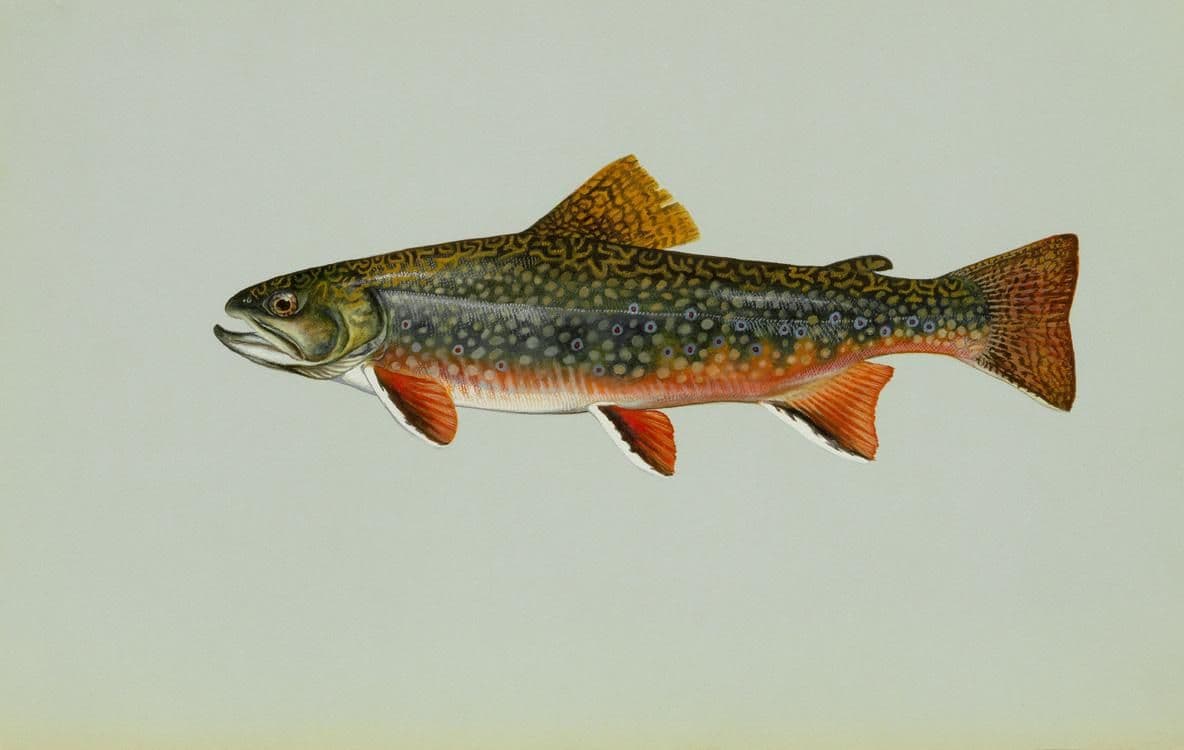
Despite its common name, the brook trout is technically a char, closely related to Arctic char and lake trout rather than true trout. Native to eastern North America, brook trout are arguably the most beautiful freshwater fish on the continent, with a dark olive-green body covered in vermiculated patterns on the back and dorsal fin, pale spots and vivid red spots with blue halos along the flanks, and brilliant orange-red fins edged in white and black during spawning season. Brook trout require the coldest and cleanest water of any trout species, making them excellent indicators of watershed health. While brook trout in their native eastern streams rarely exceed 10 inches, populations in larger rivers, lakes, and the sea-run variety known as salters can grow substantially larger. Their eagerness to take a well-presented dry fly makes them a perennial favorite among fly anglers.
Order
Salmoniformes
Family
Salmonidae
Genus
Salvelinus
Species
S. fontinalis
Small, cold headwater streams with dense canopy; spring-fed creeks and beaver ponds; requires water below 65°F and thrives best below 58°F
Native Range: Eastern North America, from Georgia and the Appalachian Mountains north to the Arctic Circle, including the Great Lakes basin and Hudson Bay drainages
Introduced Range: Western North America, Europe, South America, and Australasia; widely stocked for recreational fishing
Aquatic insects (mayflies, caddisflies, stoneflies, midges), terrestrial insects (ants, beetles, hoppers), small crustaceans, worms, and occasionally small fish
Brook trout are fall spawners, constructing redds in gravel areas with groundwater upwelling from September through November. Females seek out springs and seeps that provide a constant flow of cold, oxygen-rich water over developing eggs. Eggs incubate through winter and hatch in late winter or early spring.
Spawning Months
Spawning Temperature: 40-49°F
The Brook Trout is currently classified as Least Concern globally; southern Appalachian populations are declining due to habitat loss, acid rain, and competition from non-native trout. Responsible catch-and-release practices help protect populations for future generations of anglers.
Brook trout are eager surface feeders and respond exceptionally well to attractor dry flies, especially in small mountain streams where they have limited exposure to fishing pressure. Approach stealthily and keep a low profile, as brook trout in clear headwater streams are easily spooked. Small streamers like the Mickey Finn can be deadly for larger specimens.
A 7 to 8-foot 2 or 3-weight rod is perfect for small brook trout streams. Use 4X-6X tippet and light leaders for delicate presentations in tight quarters.
Map loading…

Limestone Spring Creeks and the Birthplace of American Fly Fishing
Mid-Atlantic

Gold Medal Waters at High Altitude
Central Rockies

The Last Best Place for Fly Fishing
Northern Rockies

The Au Sable Tradition and Great Lakes Steelhead
Great Lakes

spring creek
Brown Trout · Brook Trout

spring creek
Brown Trout · Rainbow Trout

freestone
Brown Trout · Brook Trout · Rainbow Trout
Average Size
6-12 inches, 0.25-1.5 lbs
World Record
14 lbs 8 oz (Nipigon River, Ontario, 1916)