Executive AnglerExecutive Angler
Flies

The fly fishing intelligence platform. Journal every session, build fly recipes, and read river conditions before you tie on.

Download on theApp Store
Get it onGoogle PlaySoon

Product

  • Journal
  • Rivers
  • Flies
  • Gear Locker
  • Feed
  • Import & Export

Discover

  • Madison River
  • Montana
  • Fly Library
  • Green River
  • Belize
  • Destinations
  • Articles

Directory

  • Lodges
  • Guides
  • Fly Shops
  • Gear Catalog
  • Search

Company

  • About
  • Contact
  • For Guides

© 2026 Executive Angler

All systems operational
PrivacyTermsContactSitemap
Smallmouth Bass fly fishing

Smallmouth Bass

Micropterus dolomieu

Species
HomeSpeciesSmallmouth Bass

Overview

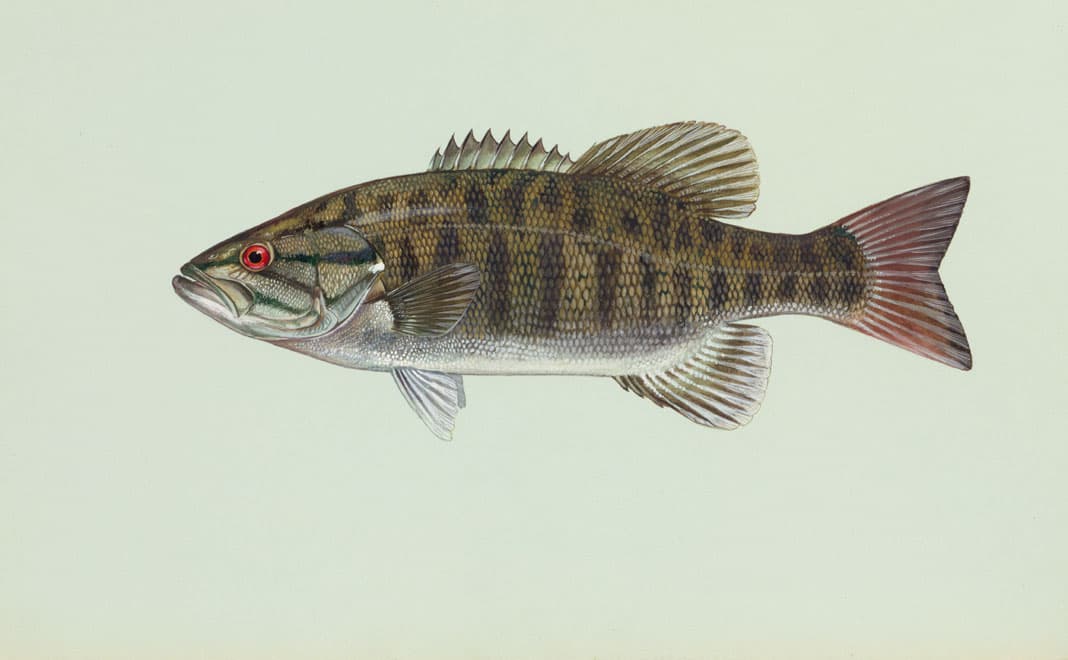
The smallmouth bass is widely regarded as the finest freshwater game fish in North America on a pound-for-pound basis, combining explosive strikes, acrobatic leaps, and dogged fighting ability that surpasses even the most celebrated trout species. Distinguished from its largemouth cousin by a smaller mouth that does not extend past the eye, bronze-brown coloring, and dark vertical bars on the flanks, the smallmouth bass thrives in clear, cool rivers and rocky lakes across the northern and eastern United States and southern Canada. Smallmouth bass on a fly rod provide action that many experienced anglers compare favorably to steelhead and Atlantic salmon. They are particularly responsive to topwater flies, crashing poppers and crayfish patterns with a ferocity that generates addictive surface explosions. The smallmouth's preference for clear, moving water and rocky habitat makes it an ideal species for wade fishing with a fly rod.

warmwaterLeast Concern; populations are healthy and expanding in many areas, though some native southern Appalachian populations face pressure from habitat degradation

Taxonomy

Order

Perciformes

Family

Centrarchidae

Genus

Micropterus

Species

M. dolomieu

Habitat & Behavior

Clear, cool rivers with rocky bottoms and moderate current; rocky lakes with minimal vegetation; prefers clean water with temperatures of 60-75°F

Native Range: Great Lakes basin, upper Mississippi, Ohio, and Tennessee River drainages; Saint Lawrence River and associated waterways in the northeastern United States and southeastern Canada

Introduced Range: Nearly every US state and southern Canada; also Europe, Africa, Asia, and South America, though less widely than largemouth bass

Diet

Crayfish are the primary food source in most habitats, supplemented by small fish (darters, minnows, sculpin), hellgrammites, dragonfly nymphs, and leeches

Spawning

Smallmouth bass spawn in late spring when water temperatures reach 60-65°F, typically from May through June. Males select nest sites on rocky or gravel substrates in 2-6 feet of water. Like largemouth bass, males guard the nest and fry aggressively for several weeks after hatching.

Spawning Months

Jan
Feb
Mar
Apr
May
Jun
Jul
Aug
Sep
Oct
Nov
Dec

Spawning Temperature: 60-65°F

Conservation Status

Least Concern; populations are healthy and expanding in many areas, though some native southern Appalachian populations face pressure from habitat degradation

The Smallmouth Bass is currently classified as Least Concern; populations are healthy and expanding in many areas, though some native southern Appalachian populations face pressure from habitat degradation. Responsible catch-and-release practices help protect populations for future generations of anglers.

Fly Fishing Tips

Smallmouth bass are strongly associated with rocky structure. Focus on current seams below riffles, boulder gardens, ledge drops, and rocky points on lakes. Crayfish patterns are the single most productive fly for smallmouth in rivers. Fish them on a dead drift through likely holding water or strip them erratically along the bottom.

Tackle Recommendations

A 9-foot 6-weight rod is perfect for most smallmouth bass fishing, offering enough power for larger flies while maintaining sensitivity for subtle takes. Use 8-12 lb fluorocarbon tippet.

Distribution Map

Recommended Fly Patterns

Clouser Minnow #2-6
Woolly Bugger #4-8
Popper #4-8
Crayfish patterns #4-8
Hellgrammite #4-8
Muddler Minnow #4-8
Deer Hair Diver #2-6

Where to Find Smallmouth Bass

Fly fishing in Pennsylvania

Pennsylvania

Limestone Spring Creeks and the Birthplace of American Fly Fishing

Mid-Atlantic

Fly fishing in Arkansas

Arkansas

Year-Round Tailwater Trout in the Ozark Highlands

Ozarks

Fly fishing in Michigan

Michigan

The Au Sable Tradition and Great Lakes Steelhead

Great Lakes

Rivers with Smallmouth Bass

Au Sable River fly fishing

Au Sable River

freestone

Brown Trout · Brook Trout · Rainbow Trout

Penns Creek fly fishing

Penns Creek

freestone

Brown Trout · Rainbow Trout · Brook Trout

Pere Marquette River fly fishing

Pere Marquette River

freestone

Brown Trout · Steelhead · Chinook Salmon

Frequently Asked Questions

Where do Smallmouth Bass live?▾
Clear, cool rivers with rocky bottoms and moderate current; rocky lakes with minimal vegetation; prefers clean water with temperatures of 60-75°F
What do Smallmouth Bass eat?▾
Crayfish are the primary food source in most habitats, supplemented by small fish (darters, minnows, sculpin), hellgrammites, dragonfly nymphs, and leeches
How big do Smallmouth Bass get?▾
Smallmouth Bass average 12-18 inches, 1-4 lbs. The world record is 11 lbs 15 oz (Dale Hollow Lake, Tennessee, 1955).
How do you fly fish for Smallmouth Bass?▾
Smallmouth bass are strongly associated with rocky structure. Focus on current seams below riffles, boulder gardens, ledge drops, and rocky points on lakes. Crayfish patterns are the single most productive fly for smallmouth in rivers. Fish them on a dead drift through likely holding water or strip them erratically along the bottom.
What tackle do you need for Smallmouth Bass?▾
A 9-foot 6-weight rod is perfect for most smallmouth bass fishing, offering enough power for larger flies while maintaining sensitivity for subtle takes. Use 8-12 lb fluorocarbon tippet.
When do Smallmouth Bass spawn?▾
Smallmouth bass spawn in late spring when water temperatures reach 60-65°F, typically from May through June. Males select nest sites on rocky or gravel substrates in 2-6 feet of water. Like largemouth bass, males guard the nest and fry aggressively for several weeks after hatching. Optimal spawning temperature: 60-65°F.
What is the conservation status of Smallmouth Bass?▾
Smallmouth Bass are currently classified as Least Concern; populations are healthy and expanding in many areas, though some native southern Appalachian populations face pressure from habitat degradation. Responsible catch-and-release practices help protect populations for future generations.
What water temperature do Smallmouth Bass prefer?▾
Smallmouth Bass thrive in water temperatures of 55-78°F (optimal 65-75°F for active feeding).

Quick Facts

Scientific Name
Micropterus dolomieu
Family
warmwater
Average Size
12-18 inches, 1-4 lbs
Record Size
11 lbs 15 oz (Dale Hollow Lake, Tennessee, 1955)
Lifespan
10-15 years in northern latitudes, with slower growth but longer lifespans in cold-water environments
Water Temp Range
55-78°F (optimal 65-75°F for active feeding)
Native Range
Great Lakes basin, upper Mississippi, Ohio, and Tennessee River drainages; Saint Lawrence River and associated waterways in the northeastern United States and southeastern Canada
Conservation
Least Concern; populations are healthy and expanding in many areas, though some native southern Appalachian populations face pressure from habitat degradation

Fun Facts

  • Smallmouth bass are considered the strongest freshwater fish in North America relative to their size, producing more force per pound than any trout species
  • They are extremely sensitive to water quality and are absent from polluted or heavily silted waterways, making them an indicator of stream health
  • The name dolomieu honors French mineralogist Deodat de Dolomieu, though the fish has no connection to the Dolomite mountains
  • Smallmouth bass have been known to leap completely out of the water up to 3 feet high when hooked, sometimes multiple times in a single fight

Where to Find

Pennsylvania

Mid-Atlantic

Arkansas

Ozarks

Michigan

Great Lakes

Size Reference

Average Size

12-18 inches, 1-4 lbs

World Record

11 lbs 15 oz (Dale Hollow Lake, Tennessee, 1955)